Petite Stars: A Playful Display Font for Creative Projects
When selecting a font for design projects, especially those aimed at children or requiring a whimsical aesthetic, finding the right typeface can make all the difference. Petite Stars stands out as a display font that effortlessly blends cuteness with clarity, making it a valuable asset in the toolkit of designers, marketers, educators, and hobbyists alike. This font is particularly well-suited for applications like children’s books, baby shower invitations, birthday cards, and party-related materials where a friendly and engaging visual tone is essential.
Understanding Petite Stars
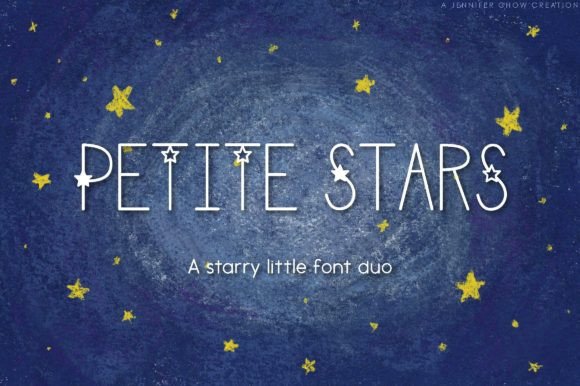
Petite Stars is a hand-drawn-style display font designed to evoke warmth and playfulness. Its characters feature subtle curves, star-like accents, and an overall soft appearance that gives it a gentle, approachable feel. Unlike many fonts that lean too heavily into either professionalism or informality, Petite Stars strikes a balance between charm and readability, ensuring it remains effective even when used in longer text passages, albeit not ideal for body copy.
Key Characteristics
- Handwritten Style: The organic look of Petite Stars mimics a child's handwriting, which enhances its appeal for youth-oriented content.
- Star Accents: Unique star shapes integrated into certain letters add visual interest and help maintain brand consistency across various materials.
- High Contrast: Despite its delicate appearance, the font maintains strong contrast between strokes, aiding legibility on screens and in print.
- Variety of Characters: Petite Stars includes a comprehensive set of uppercase and lowercase letters, numbers, symbols, and punctuation, offering flexibility for diverse uses.
Practical Applications of Petite Stars
The versatility of Petite Stars makes it suitable for a range of creative endeavors. Designers often use it in branding for early childhood education centers, toy companies, or family-oriented businesses where a warm and inviting visual identity is key. Marketers may incorporate it into social media posts, promotional banners, or email headers to catch attention and convey a sense of fun and care.
For educators, Petite Stars can be used in classroom posters, activity sheets, or educational materials tailored for young learners. Its cheerful style supports engagement without overwhelming the reader. Small business owners who cater to families or run craft-focused ventures also benefit from using this font to create cohesive and appealing product packaging, signage, or website headers.
Real-World Use Scenarios
- Baby Shower Invitations: Petite Stars brings a sweet and personal touch to event invites, helping to establish a joyful and anticipatory mood.
- Children’s Birthday Cards: Whether digital or printed, the font adds a layer of excitement and innocence that resonates with both kids and parents.
- Craft Projects: From scrapbooking to DIY greeting cards, Petite Stars fits naturally into handmade designs, enhancing their visual appeal with minimal effort.
- Merchandise Branding: When applied to t-shirts, stickers, or plush toys, Petite Stars reinforces a playful and child-friendly image.
Evaluating Quality and Usability
In terms of quality, Petite Stars delivers a polished and professional finish despite its casual appearance. The attention to detail in each character ensures that the font feels intentional and refined. It’s clear that the designer put effort into maintaining consistent spacing and proportions, which are crucial for any font aiming to perform well in multiple environments.
Usability is another strong point. While Petite Stars is best suited for headings and short texts due to its decorative nature, it still handles basic typographic needs effectively. The inclusion of alternate characters and ligatures allows for customization without compromising the font’s integrity. Users can expect reliable performance across different platforms and software, including Adobe Creative Suite and online design tools like Canva or Figma.
Strengths and Limitations
The primary strength of Petite Stars lies in its ability to communicate a lighthearted and affectionate tone. It’s perfect for contexts where emotional resonance matters more than strict formality. Additionally, its unique design helps differentiate a project visually, standing out in crowded digital spaces or among competitors.
However, it’s important to recognize its limitations. Petite Stars is not a font for long paragraphs or dense documents. Its decorative elements, while charming, can reduce legibility when used in extended text blocks. Designers should consider pairing it with a clean sans-serif or serif font for body copy to maintain a balanced layout.
Who Should Consider Using Petite Stars?
This font appeals most to professionals and creators whose work involves designing for children, events, or craft-based audiences. Freelancers in graphic design, bloggers focusing on parenting or lifestyle niches, and small business owners marketing to families will find Petite Stars particularly useful. Educators and publishers working on materials for young readers can also leverage its friendly style to foster connection and comprehension.
Entrepreneurs launching a new line of children’s products might find Petite Stars instrumental in developing a brand voice that feels genuine and relatable. Similarly, marketers running campaigns around holidays, birthdays, or family-centric themes can enhance message delivery by aligning typography with the intended audience's emotional response.
Design Recommendations
- Use Petite Stars for headlines, titles, or short phrases to highlight its strengths in visual impact and charm.
- Pair it with a neutral supporting font for body text to ensure readability and maintain a professional structure.
- Avoid using it in small sizes or low-resolution prints where its fine details may become lost.
- Consider using it sparingly in multi-font layouts to preserve its standout quality without overwhelming the design.
Long-Term Value and Consistency
Typefaces like Petite Stars offer lasting value when they remain relevant across trends and applications. Its timeless, non-gimmicky design ensures it won’t feel outdated quickly, especially in industries like children’s publishing and event design where nostalgia and warmth are appreciated traits. Moreover, Petite Stars maintains a high level of consistency in weight and shape, allowing for seamless integration across different mediums and formats.
As a part of a broader design system, Petite Stars can serve as a unifying element that ties together logos, packaging, and digital assets. For instance, a boutique selling personalized baby gifts might use Petite Stars consistently across all branding materials to reinforce a cohesive and recognizable style.
Observations from Practical Use
In real-world testing, Petite Stars performs reliably in both digital and print settings. When used in a mobile-responsive web header, it adapts well to screen scaling and maintains clarity. In print, whether on glossy paper or fabric, the font retains its softness and charm, contributing positively to the overall aesthetics of the piece.
One notable observation is how Petite Stars reacts under varying color schemes. Lighter backgrounds tend to amplify its delicacy, while darker tones give it a bold yet still cute presence. This adaptability makes it a strong candidate for multi-channel campaigns where visual continuity is desired but not always easy to achieve.
Conclusion and Final Thoughts
Petite Stars is a thoughtfully crafted display font that serves a specific but impactful role in the design world. It excels in conveying warmth, joy, and simplicity—qualities that are hard to replicate with other typefaces. Whether you’re creating a baby announcement, designing a kid-friendly blog, or planning a themed party, Petite Stars offers a practical solution with a delightful twist.
Its effectiveness is rooted in its purpose: to bring a sense of fun and familiarity to visual communication. By understanding where and how to apply Petite Stars, users can maximize its potential without overusing it. As with any creative tool, the key is knowing your audience and your project’s goals. If those involve children, celebrations, or a need for a friendly visual presence, Petite Stars is likely a great fit.
Ultimately, Petite Stars is more than just a font—it’s a design choice that reflects intentionality and care. For those seeking to infuse their projects with a touch of innocence and charm, this typeface provides a compelling option worth exploring.